Tuesday, October 1, 2013

Introduction

Hello, and welcome to my Roots of Democracy Travel Blog! My name is Maya Johnson and I am a sophomore at San Ramon Valley High School. This is a blog for my World History class. It shows important monuments from each nation and tells how they contributed to modern democracy. Thanks for reading!


Maya Johnson
World History
Second Period

Ancient Greece

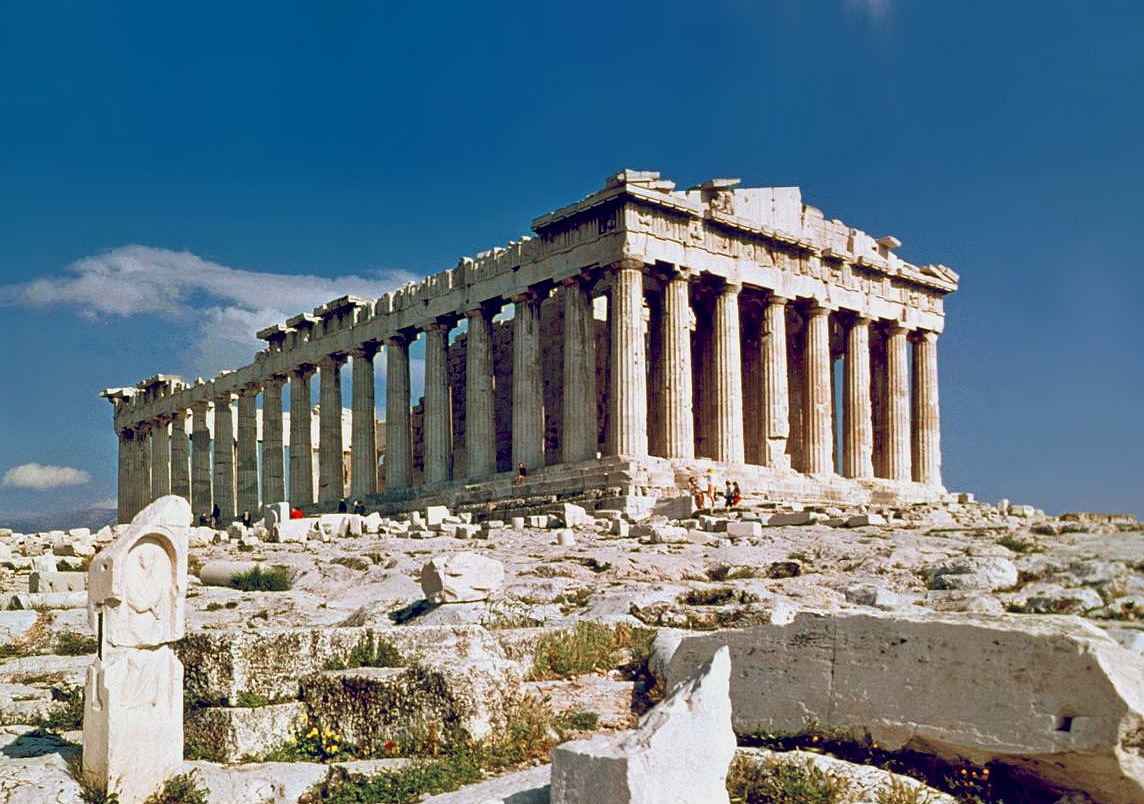
The Parthenon
 
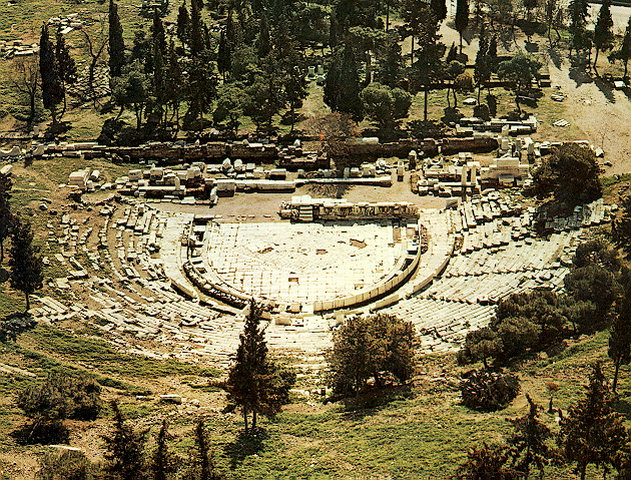
My family and I arrived at Athens on Saturday at noon. The first thing we did was check into our hotel and eat lunch in the Agora.  The food was really good and the town was beautiful. Then we toured the Stoa of Zeus, which is a center of education in Athens.  After the Stoa we walked over to the Museum of Greek Leaders.  It was actually really interesting reading about all of the leaders and their contributions to the government of Athens and to modern democracy. Two examples that really stuck in our heads were Solon, who gave the right to vote to male citizens, and Cleisthenes, who divided Athens into city states. Then we climbed the steps to the top of the Acropolis. The Acropolis is a big hill in the middle of Athens with all of the important buildings.  The view was incredible; we could see the whole city from the top!  On the Acropolis there is a temple called the Parthenon.  It is a rectangular building with monstrous columns on all four sides. The Temple is dedicated to the goddess of wisdom, Athena, because she beat Poseidon in the fight for Athens.  After the Parthenon we walked to the Erechtheion, which is also on the Acropolis.  The Erechtheion is a temple dedicated to both Athena and Poseidon and is said to be built on the spot where Athena won the battle against Poseidon for Athens.  We then visited the Theatre of Dionysus. It is an open-air theatre with seats facing a large area in the middle. The theatre was used for festivals in honor of the God of wine and partying: Dionysus. I loved every second I spent in Greece. Greek mythology and history is so interesting! I would come back again in a heartbeat.

The Theatre of Dionysus
 

Ancient Greece's Contributions to Modern Democracy:

  • Written laws
  • Cabinet
  • Citizens participate in government
  • Citizens can submit laws
  • The Judiciary administers justice
  • No one is above the law
  • Separation of powers
  • Power is not hereditary
  • Education is important
  • The government is for the people
  • Equality
  • Democracy
  • Every individual plays a role

Ancient Rome

The Coliseum
By the time my family and I arrived in Rome, we were starved from the plane ride. The first thing we did was walk to the Forum and eat some delicious food. The Forum was really big! Ancient Romans used it as a marketplace and business center. After we finished eating, we walked to the Arch of Titus. It was surrounded by a garden and looked really pleasant. After the Arch we walked to the Coliseum.  The Arch of Titus is nothing compared to the Coliseum!  It was used for entertainment purposes.  Citizens would watch
The Arch of Titus
fights to the death. Some fights were man vs. man, but others were man vs. lion! There is a network of tunnels under the Coliseum that were used to house animals and gladiators. The last places we visited were the Senate house, or the Curia and the Courthouse, or the Basilica Julia.  Both were large and made of stone with red roofs. In the Basilica Julia there were balconies that citizens could watch trials from. Present day the Courthouse is nothing more than the stumps of past columns.  The Curia is still mostly intact and hasn't deteriorated much over the years. It used to have rows of benches on either side of the room for the Senate members to sit in and debate over important issues.  I loved visiting Rome. It was so amazing to have the opportunity to see all of the old buildings, especially the Coliseum and the Parthenon.

Ancient Rome's Contributions to Modern Democracy:

  • Written laws
  • Separation of powers
  • Freedom of speech
  • Justinian Code
  • Elected officials
  • Reason
  • Equality/ natural law
  • Republic
  • Ability to veto
  • One Senate

Israel


The Western Wall
My family and I arrived in Israel on Monday at noon.  The first place we visited was the Western
Wall. It was really interesting seeing all the prayers and requests written on notes and placed in the cracks of the wall. So many people come to the Wall just to place their most desperate wish.  The next place we visited was the Church of the Holy Sepulcher. It is huge on the inside, with enormous ceilings and walls made out of stone.  The Church is very important to Christians; it was the site where Jesus was  crucified, buried, and resurrected.  We then walked along the Via Dolorosa.  The Via Dolorosa is a path that
The Church of the Holy Sepulcher
Jesus supposedly took on his way to be crucified. It is very sacred to Christians and many ceremonies are conducted along it. Visiting Jerusalem was a very powerful experience that I will remember forever.

Israel's Contributions to Modern Democracy:

  • Equality
  • Written laws
  • Individual worth
  • Human kind's duty to oppose injustice and oppression

England


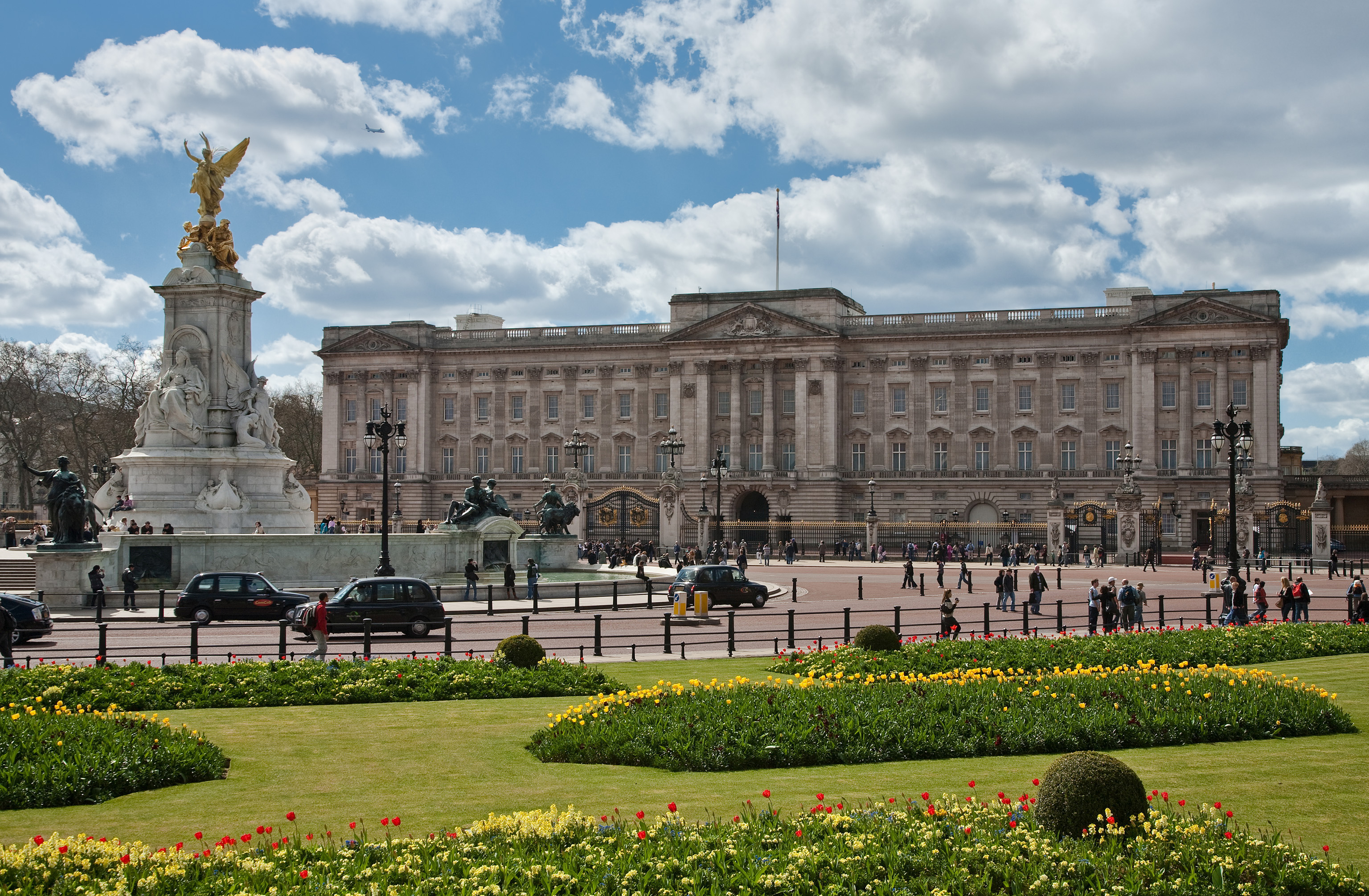
Buckingham Palace
The first thing my family and I did when we got to England was visit and tour Buckingham Palace. It was huge. My favorite part was messing with the ever-so-talkative guards with fuzzy hats.  The inside of the palace was beautiful. I felt royal just walking through it. A lot of the rooms are painted a red and gold color scheme, representing royalty. We then visited Windsor Castle. It is astonishingly large with big courtyards of grass surrounded by tall buildings. It is much bigger than Buckingham Palace. After that we decided to walk across the River Thames on the Westminster Bridge and tour the Palace.
Windsor Castle
Westminster Palace is absolutely enormous. It has 1,100 rooms and 3 miles of corridors.  Then we walked past St. James Palace. It is very tall and made of brick with two of my favorite guards standing on the outside.  Afterwards, the last thing we did was tour the Tower of London. It is a rectangular building made out of stone with towers on the four corners of the building. Six ravens are kept at the Tower of London at all times. According to legend, if anything happens to the ravens, the kingdom will fall. Overall I really enjoyed visiting England and would love to come back again!

England's Contributions to Modern Democracy

  • Important documents that became models for later nations
    • Magna Carta
    • English Bill of Rights
    • Petition of Right
  • Model Parliament
  • Habeus Corpus
  • Jury system

France


The Eiffel Tower
When my family and I arrived in France, we were exceptionally tired from all of the traveling. The first place we went was straight to our hotel to get some rest. When we woke up from our much needed nap, we decided to go on the Bateau Mouche to visit the Eiffel Tower. There were so many tourists around the Tower it was unbelievable.  It is made of metal and has three levels, the second of which has food, and the third is for admiring the view from the top of the monument.  After we took the crowded elevator down, we traveled along the River Seine and visited the Louvre.  It has two glass pyramids in front of the building, one really large one and a smaller one.  You enter the museum by going down a staircase inside the pyramids. The Louvre was a very interesting museum. We even got to see the Mona Lisa there.  The next stop in the Bateau Mouche boat tour was Notre Dame. Notre Dame is a Roman Catholic Church in Paris.  Napoleon was crowned ruler of France in the Church.  It took 100 years to build and is over 800 years old. It was enormous, and the bells were really loud. The Church is very gothic, with gargoyles looking down at you from the walls. The last stop on our boat tour was the Musée d'Orsay. It is a very long building that is made of stone. It was originally a train station, but it was converted into a wonderful art museum. It has an enormous collection of impressionist and post-impressionist artwork, including: Van Gogh's self portrait, Starry Night, and Bridge over a Pond of Water Lilies by Monet. Now we are about to head back to America; I am relieved to be going home and at the same time really sad that I have to go. Overall, Paris was an amazing experience. I would love to go back and see even more of what this amazing city has to offer.


The Louvre Museum

France's Contributions to Modern Democracy:

  • Humanism
  • Printing press
  • The Enlightenment
  • Natural Law
  • Reason and logic
  • Separation of powers
  • The Social Contract
  • Citizens can overthrow the government
  • Scientific Revolution
  • The power of the government comes from the people
  • Liberty